


Processing pharmaceutical powders involves a series of operations to transform raw Active Pharmaceutical Ingredients (APIs) and excipients such as lactose, sucrose and sorbitol into homogeneous, flowable mixtures for tablets or capsules. Industrial sieves place a key role in this process.
Our Complete Guide to Industrial Sieves gives an overview on the importance and processes involved in industrial screening and the different types of particle size separation equipment. This supporting guide helps engineering, quality and procurement teams select industrial sieves for pharmaceutical powders. It focuses on pharmaceutical powder handling applications where choosing the right pharmaceutical-grade sieving system is important to minimise waste, improve throughput and support compliance with safety regulations.
Why industrial sieves are critical in ingestible powder manufacturing
Industrial sieves are critical in food and medical powder manufacturing because these products are ingested, so the process and industrial equipment must meet critical safety and quality standards.
Compliance standards for pharmaceutical sieves ensure that every component in contact with ingestibles is safe, traceable and capable of producing consistent particle sizes. These safety standards cover both the physical mesh and the equipment design, including:
- Mesh accuracy and calibration
- Hygienic design & material compliance:
- Operational and safety standards
- Verification procedures
Through compliance with these standards, industrial sieves serve as a preventive barrier against contamination, guarantee consistent particle size, and promote safety.

Why pharmaceutical powders present special challenges
Pharmaceutical powders may not appear fundamentally different from powders handled in food processing: see our blog on industrial sieves for food powders. However, the risks associated with pharmaceutical powder handling are more tightly constrained.
Importantly, pharmaceutical processes are typically validated against strictly defined operating ranges. APIs and excipients must be carefully processed to create a homogeneous mixture, essential for consistent drug potency and avoiding dose variability. Equipment that behaves inconsistently or requires frequent manual intervention can introduce risks that are difficult to manage once production is underway.
Further, pharmaceutical batches often carry high material value and long lead times, which means losses caused by inefficient separation or contamination can have a disproportionate impact. Pharmaceutical powders may also be sensitive to mechanical stress, segregation or electrostatic effects, all of which influence how reliably they can be sieved under routine conditions.
These factors mean that sieve selection for pharmaceutical powders is likely to prioritise control, repeatability and defensibility over maximum throughput or flexibility.
What buyers need to consider before specifying a sieve
To select the most suitable industrial sieve for pharmaceutical powders you must first understand how your powders behave, what the process demands are, and how regulatory and hygiene requirements influence equipment design. Below are key factors to consider when evaluating sieving systems for pharmaceutical processing.
Powder behaviour
Pharmaceutical powders vary widely in their physical characteristics. Some flow freely and respond predictably to vibration, while others are cohesive, electrostatic or prone to forming agglomerates. These behaviours influence how material spreads across the screen, how readily it presents to the mesh and how stable the sieving process remains over time.
At Farleygreene our team of engineers and technicians are always ready to answer your questions about the best industrial sieve for your pharmaceutical powder.
Hygiene and cleanability
In pharmaceutical environments, processing equipment must be designed to minimise contamination risk. This influences material selection, surface finishes, fabrication standards and inspection practices, all of which are expected to support use within regulated manufacturing environments.
The ability to inspect, clean and reassemble pharmaceutical production equipment in a controlled and repeatable way matters as much as mechanical performance in pharmaceutical production. This is particularly important in multi-product facilities, where frequent changeovers are common.
Buyers looking for industrial sieves for pharmaceutical powders should:
- Choose equipment with crevice-free construction, pharmaceutical-grade stainless steel (typically 304 or 316L), and polished welds to support effective cleaning
- Consider designs compatible with WIP (Wash-in-Place) or CIP (Clean-in-Place) systems where validated wet cleaning is required without full disassembly
- Assess whether DIP-style (Drop in Place) or tool-free removable mesh assemblies will support controlled inspection and rapid cleaning
- Ensure quick, repeatable mesh changeover and access to dedicated spare parts where separate product lines are maintained.
Compliance and traceability
In pharmaceutical powder processes, components such as industrial sieves must conform with strict compliance and traceability standards to support safety. For example:
- The Medicines and Healthcare Products Regulatory Agency (MHRA)’s GMP (Good Manufacturing Practice) requires equipment to be easily disassembled without tools for rapid cleaning and validation between batches.
- Many pharmaceutical powders (like starch or fine APIs) are combustible, so the sieves may also need to comply with ATEX requirements affecting how they are designed and installed.
- Documentation and traceability are key to demonstrating compliance in manufacture.
Buyers should therefore check that any sieve introduced to a pharmaceutical process complies with standards and is traceable. Read more about Farleygreene’s compliance and standards here.
Installation point in the process
The type of sieve you choose will also depend on its function and where it will sit in your process line. Pre-mix sieving removes contaminants before blending takes place, whilst post-mix sieving ensures uniformity before packaging. Sieves can also be used in-line between stages to screen the powder as it proceeds along the line.
In pharmaceutical powder handling, sieves typically sit between conveying, blending or granulation steps. How powder is fed into and discharged from the sieve can influence segregation, dust generation and containment performance.
By weighing all these considerations, pharmaceutical manufacturers can choose sieving equipment that delivers consistent performance, supports regulatory compliance and adds long-term value to their production process.
Types of industrial sieves for processing pharmaceutical powder
In pharmaceutical powder handling, the choice of sieving system depends on factors such as product texture, flowability, hygiene requirements and throughput rates. At Farleygreene we offer a wide range of sieving technologies, including check, grading, linear, centrifugal, ultrasonic and small batch systems. Below is an explanation of the most widely used sieve types for pharmaceutical industry applications.
1. Check sieves (police sieving)
Check sieving, also known as police sieving, is the most common type of industrial sieving in food and pharmaceutical production. Its primary function is to ensure safety and product quality before the next stage of processing or packaging.
These sieves are used to:
- Remove foreign bodies: ensure no unexpected contaminants (e.g. packaging fragments, glove parts, insects) have entered the product stream
- Break up lumps: prevent agglomerates of APIs or excipients from affecting downstream processing
- Perform quality checks: act as a critical control point (CCP) for pharmaceutical safety systems.
Check sieves are typically installed just before packaging or after mixing, where space is limited but hygiene and throughput are essential. Farleygreene’s vacuum and pressure range of vibratory check screener sieves is ideal for ensuring the particle size of pharmaceutical excipients. The vacuum and pressure sieves ensure that very fine, dusty materials used in pharmaceutical industry can be screened safely, protecting the user and surrounding environment: see our Sievmaster Vacusiev range.
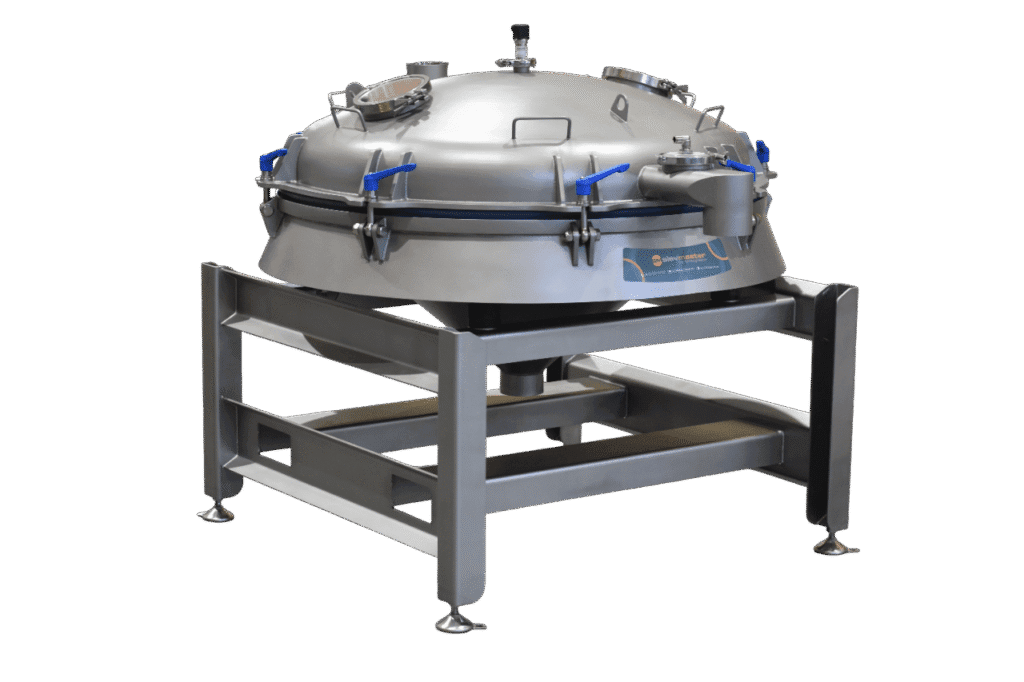
2. Grading sieves
Grading sieving is a more precise operation than check sieving. It separates materials into distinct particle size bands or “cuts”, ensuring uniformity in finished pharmaceutical powders that must meet tight specifications.
Grading sieves are designed to:
- Create multiple particle size cuts: up to four mesh decks with decreasing aperture sizes can separate fine, mid-sized and oversize particles.
- Use the right configuration for separation efficiency: traditional multi-deck sieves are compact and ideal for most grading applications, but in high-throughput or complex processes a series of single-deck sieves positioned in sequence can improve performance by optimising flow and mesh contact at each stage.
- Reduce risk of contamination: modular units reduce the potential for cross-contamination between cuts.
Farleygreene’s Sievmaster Multiscreen range using mechanical screen cleaning with pharma-safe silicone rubber balls and nylon glides enables even difficult products to be screened, and is well-suited to separate and grade pharmaceutical excipients and APIs, where consistent particle sizing is key to product performance. An upgrade for pharmaceutical applications using ultrasonic technology is also available (see below).
3. Linear sieves
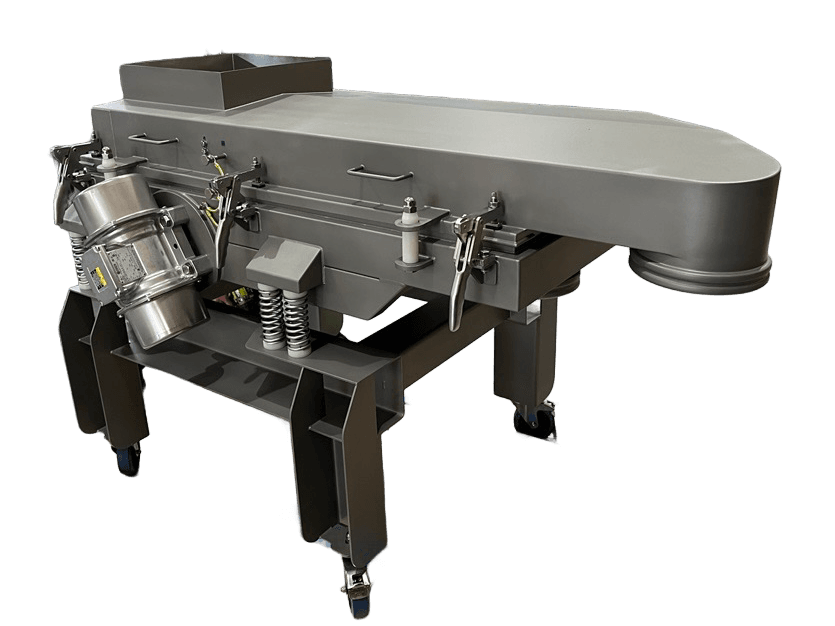
Linear sieving uses a horizontal motion to move product across a rectangular mesh. The long dwell time allows efficient separation, particularly where there’s a high percentage of oversize or fines.
These sieves are suited to:
- Delicate or friable materials: gentle linear motion avoids damaging brittle products.
- High oversize content: the sieve’s length allows fines to pass through without being blocked by larger particles.
- Integrated conveying: can replace or supplement conveyors and even lift product if installed on an incline.
- De-dusting applications to remove small particles from finished products.
Linear sieves may also be used for tablet and capsule sorting: aligning pharmaceutical capsules and pills using rows of parallel bars instead of mesh, ensuring an accurate width of product despite their high aspect ratio, whilst processing quickly and efficiently.
See Farleygreene’s Sievmaster Segregator range of linear sieves.
Ultrasonic sieves
Ultrasonic sieving enhances a vibratory sieve with high-frequency ultrasonic waves applied directly to the mesh. This energy keeps fine or electrostatic powders moving, preventing mesh blinding and improving flow.
These sieves are ideal for:
- Very fine powders: used where particle sizes are below 100µm
- Electrostatic or clumping materials: suitable for powders that tend to cake
- Additive dosing or pre-weighing systems: particularly where product purity is critical before mixing.
Our Sievmaster Ultrasonic System (also known as an “ultrasonic deblinding system”) is an add-on, designed to fit within most Sievmaster sieving machines. The Ultrasonic System applies powerful ultrasonic waves to a fine mesh screen, ensuring that very fine pharmaceutical powders can flow freely, preventing mesh blockage and blinding to deliver efficient sifting of powders and accelerate throughput.
Powder behaviour in industrial sieves
The choice of sieve system is also influenced by powder behaviour. Free-flowing powders may sieve readily under gentle vibration, while cohesive or poorly flowing materials may require additional energy to achieve consistent separation. However, increased mechanical action can increase the risk of degradation or unintended size reduction.
In practice, buyers for pharmaceutical applications tend to favour sieving approaches that deliver predictable separation behaviour with minimal intervention, even if this means accepting lower throughput or efficiency.
Mesh specification and selection
Mesh type, aperture and wire thickness all affect how efficiently your product is screened. Choosing the correct mesh is one of the most critical aspects of specifying an industrial sieve for pharmaceutical applications.
Woven wire mesh is the most used option in vibratory sieving. It’s made by interlacing metal (typically stainless steel), nylon or other materials to form a grid of apertures. These meshes are available in a wide range of aperture sizes and wire diameters, allowing precise control over particle separation. However, they must be handled with care. Woven wire is susceptible to warping or breakage over time, particularly in high-throughput or abrasive applications, so regular inspection and replacement is essential.
Perforated plate mesh is a durable alternative made from solid sheet metal with precision-punched holes. While it offers limited sizing flexibility and lower open area (which can reduce throughput), it is far more resistant to damage, making it suitable for robust sieving. Aperture sizes for perforated plate tend to be standardised to whole or half millimetres.
Wedge wire mesh, often used in centrifugal sifters and some linear screeners, is made from parallel wedge-shaped wires welded to support rods. This design creates long narrow slots that are much harder to blind (block), providing very consistent throughput over time. Wedge wire is typically more expensive to manufacture but offers exceptional durability and reliability for continuous or difficult-to-screen materials.
Buyers should consider several aspects when specifying the mesh for their sieve:
- Aperture: the distance between wires (measured in mm or microns)
- Mesh count: expressed as the number of openings per linear inch (e.g. 80 mesh)
- Wire diameter: thicker wires increase mesh strength and durability but reduce open area. Thinner wires improve throughput and sensitivity, especially for fine powders, but may be more prone to damage.
- Open area: the proportion of the mesh that is made up of holes rather than wires. A higher percentage open area allows greater throughput but may reduce mesh longevity or structural integrity.
- Pre-tensioned mesh systems: These hold mesh screens under consistent tension inside frames, maintaining flatness and performance. They are quick to change and reduce the risk of blinding.
The optimal mesh selection will vary depending on the ingredient type, desired throughput, regulatory constraints and cleaning requirements. For example, where frequent product changeovers are required, mesh frames with tool-free removal can drastically reduce downtime and risk.
Final considerations
Choosing industrial sieves for pharmaceutical powders is ultimately about managing risk in a controlled environment. Powder behaviour, cleanability and consistency tend to matter more than headline capacity figures or theoretical performance, and early technical discussion with your supplier often proves the most effective way to balance performance with long-term process stability.
Farleygreene is trusted by companies such as GSK, Bayer and Astellas to provide industrial sieves to support the pharmaceutical industry in the supply of contamination free end products. Our proven engineering expertise, global distributor network and commitment to precision, compliance, and long-term support help pharmaceutical manufacturers optimise process lines, enhance product quality and meet the industry’s demanding regulatory standards.
We offer a wide range of industrial sieving equipment 100% designed and manufactured in the UK, ensuring consistent quality and fast turnaround, and welcome the opportunity to help you select the right sieve for your application. We also offer an in-house product testing facility to validate performance and help buyers select the right equipment.
Contact us today to choose your sieve for pharmaceutical applications.
…………………………………………………………………………………………………………………………………………………………………………………………………………………………………………………………………..
FAQs about industrial sieves for pharmaceutical powders
1. What type of industrial sieve is best for pharmaceutical powders?
The most suitable sieve depends on the application. Check sieving is commonly used to remove agglomerates or foreign bodies, while grading is chosen where tighter particle size control is required. Powder behaviour and cleanability expectations usually guide the final choice.
2. How do pharmaceutical powder applications differ from food powder applications?
Pharmaceutical powder processes typically operate within more tightly controlled environments, with greater emphasis on repeatability, documentation and contamination control. Specification decisions therefore tend to have greater long-term implications.
3. Do industrial sieves for pharmaceutical powders need to meet ATEX requirements?
In some fine powder applications where dust explosion risk is present, ATEX requirements may apply. This can influence material selection, earthing arrangements and overall system design.
4. What materials are typically used in pharmaceutical powder sieves?
Pharmaceutical powder sieves are generally manufactured from stainless steel, commonly 304 or 316L, with finishes designed to support effective cleaning and minimise powder retention.
5. How does powder flowability affect sieve selection?
Free-flowing powders tend to separate predictably, while cohesive or moisture-sensitive materials may require adjustments to mesh size, dwell time or sieving approach to maintain consistent performance.
6. Is higher throughput always better when sieving pharmaceutical powders?
Not necessarily. In regulated environments, consistent separation and stable operation are often prioritised over maximum capacity, particularly where validation and repeatability are important.
7. How important is cleanability in pharmaceutical powder sieving?
Cleanability is critical. Equipment design should allow inspection, cleaning and reassembly to be carried out in a controlled and repeatable way to minimise cross-contamination risk.
8. What are common mistakes when specifying industrial sieves for pharmaceutical powders?
Common issues include assuming food-grade equipment is automatically suitable, over-specifying mesh size without considering powder behaviour, and overlooking how cleaning and integration requirements affect long-term operation.