


By Daniel Morlan, Global Sales Manager, Farleygreene
Reclaimed and recycled material often includes abrasive materials, sharp particles and dust, and must be processed within the challenging environment of recyclate processing and materials recovery operations. Operators screening reclaimed feedstock therefore need equipment that is robust, flexible, easy to adjust, and able to cope with unpredictable materials.
Choosing the right screening equipment is key to maximising your material recovery rate and quality control, improving the resale value of your recycled materials whilst meeting increasingly demanding sustainability targets.
If you are a process engineer, operations manager or founder scaling up a recycling operation or building a manufacturing line around reclaimed feedstock, this guide covers what to look for when specifying the right equipment for your operation.
Why reclaimed feedstock is hard to sort consistently
Recycled material batches are inconsistent, made up of a variety of unsorted mixed or commingled streams. This is known in the sieving industry as ‘irregular’ or ‘variable’ feedstock, and brings particular challenges. To gain commercial value from reclaimed or recycled material, you must separate out anything oversized, remove contamination, and sort what’s left to a consistent particle size. A sieve or screen can be used to separate the material, whilst other technologies achieve this using optical sorters and magnetic separators.
In an industrial sieve, the recycled material is fed onto a mesh screen, and the unit is vibrated so that particles smaller than the mesh openings (known as fines) fall through, while larger particles (known as oversize) are carried across the surface to a separate outlet. For more detail on industrial sieving, see our Complete Guide to Industrial Sieves.
Mixed particle shapes, moisture content and surface contamination all change how the raw feedstock material moves across that mesh. A batch of shredded plastic might include flat flakes, curled slivers and fine dust, whilst a load of crushed glass or metal chips might carry residual grit or organic contamination from the collection process. This inconsistency causes your output (and the amount of valuable material you recover from it) to vary from one batch to the next, unless you have the right sieve and it is properly configured.
Two of the most important factors determining screening performance are dwell time (how long a particle stays on the mesh before it passes through or is carried off as oversize) and separation efficiency (the percentage of fines actually collected against how much fine material was present at the start), although feed rate, vibration characteristics, particle shape and mesh selection also play an important role. Where these are not set up to handle variation, problems can arise, leading to wastage of recoverable material as well as time.
Common problems when screening reclaimed and recycled material
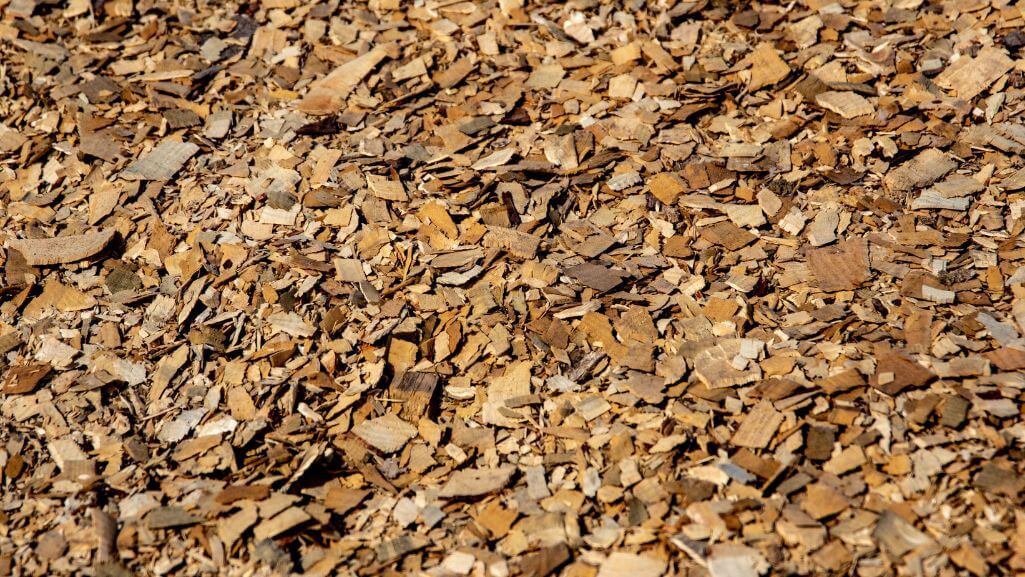
In over 50 years of experience in sieving, we find that six main issues account for most of the throughput, quality and recovery rate problems seen during recyclate processing operations.
Inconsistent particle size and recovery rate
With reclaimed and recycled feedstock, particle shape, moisture and contamination levels vary between batches, so settings tuned for one batch can under- or over-process the next.
Contamination in the output
Reclaimed material often carries residue from its previous life: dirt, organic matter, adhesive residue, or fragments of a different material entirely. If this is not properly separated out, it ends up in the finished product and can make a batch unsellable, or lead to it being rejected from the next stage of processing.
Mesh blockages and blinding
Moisture, organic contamination or static build-up can cause material particles to lodge in the mesh openings instead of passing through cleanly, a problem known as ‘blinding’. Once blinding starts, throughput will drop and fines that should be passing through begin building up on top of the mesh, leading to a fall in the material recovery rate.
Mesh wear from abrasive material
Materials such as shredded metal, glass cullet, ground concrete and angular plastic flakes will wear a mesh considerably faster than smoother, more uniform inputs such as powders.
Foreign objects and impact damage
Recycling streams often contain unexpected oversized items, screws, off-cuts and other debris that a fine mesh is not designed to handle. These items can damage the mesh or damage the machine itself if the impact is heavy enough. Introducing a coarser mesh ahead of this stage can be sufficient protection.
Harsh operating conditions
Recycling and reclamation lines can be aggressive environments. Sharp or abrasive fragments, heavy impacts from dense debris, and dust levels that can raise ATEX considerations are common. Industrial sieves used in recycling must be durable against these factors.
Most of these problems point to the same underlying issue: separation equipment using a single, fixed configuration is being asked to do a job that needs to flex with unsorted and irregular material input. The right combination of sieve type and build quality solves these issues.
How to choose the right screening equipment for your material
The right industrial sieving range for your recycling depends on what job you need it to do. You may need a simple check on a continuous stream of reclaimed feedstock; precise grading into multiple size bands; help with fine or static fractions; extra dwell time for delicate or high-oversize material; or you may simply need a smaller-scale option. Here are the Farleygreene sieving ranges most commonly used by our customers in the recyclate processing sector:
Check screener: the workhorse for general recycling
Check sieving is the simplest and most common form of screening: material passes over a single mesh that catches foreign bodies, breaks up lumps, and confirms a batch meets a basic quality standard (rather than separating it into multiple size grades). For most recycling operations processing a commingled waste stream this is the starting point. For general recycling applications, where the main aim is to remove oversize and foreign material such as plastic swarf from a continuous stream (rather than producing multiple size fractions), Farleygreene’s Sievmaster Slimline range provides highly effective check screening and is available in four diameters.
Multiscreen sieve: best for grading into multiple size bands
Grading sorts material into more than one size band, rather than simply removing oversize and collecting a single fines output. It works by passing material across a series of meshes with decreasing aperture sizes, so that each mesh captures a different size fraction. For reclaimed material such as PET flakes, this means a single machine can produce two, three or four separate size grades from one variable input, each one meeting its own output specification. Multiscreen grading recovers value from fractions that a single-pass sieve would otherwise combine or discard.
Farleygreene’s Sievmaster Multiscreen range of vibratory multi-deck screeners achieve precise separation whilst sieving material in up to 4 grades (3 screens), ideal for the multi-fraction grading of recycled materials.
Grading recycled material correctly at this stage also protects the value of any higher-value processing that happens afterwards. Downstream separation technology, including optical sorting, eddy current separation or manual grading, works best on a feedstock that has already been sized consistently.
Ultrasonic screening: for fine or static materials
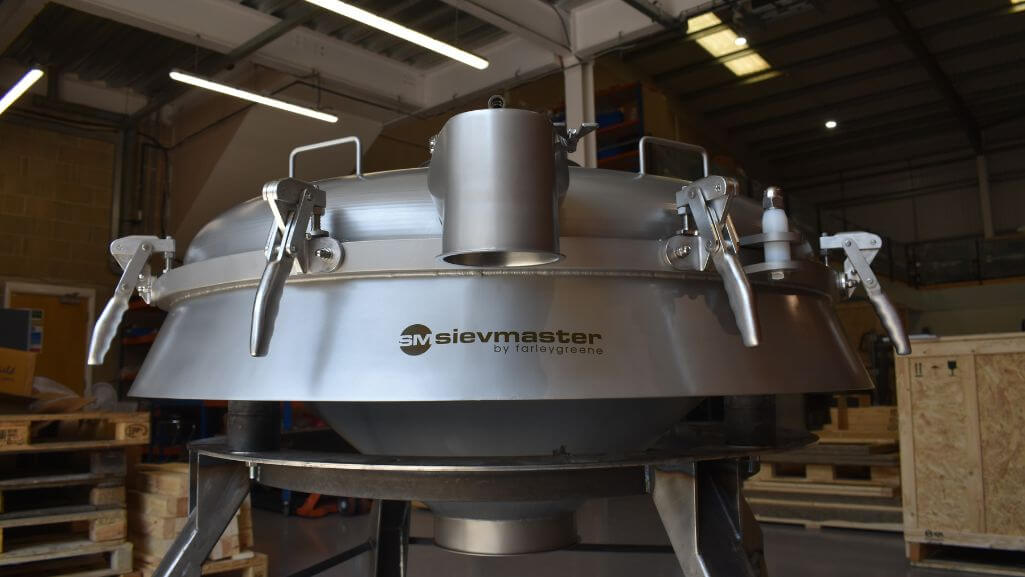
For finer materials that would otherwise clog a standard mesh (such as fine plastics, powdered residues, or reclaimed fractions prone to blinding) ultrasonic sieving helps to keep the mesh clear. By applying high-frequency vibration directly to the screen, ultrasonic sieves help to maintain your throughput and improve separation efficiency in fine, difficult or static materials by reducing mesh blinding. Our Sievmaster Ultrasonic system is designed to fit within most Sievmaster sieving machines, using high frequency, very low amplitude vibration of the mesh screen to help fine or static elements of reclaimed material sieve more effectively. Farleygreene’s Sievgen range offers quick and easy reclamation of metal powders using ultrasonic sieving.
Linear sieving: for abrasive, heavy and bulky material
Linear sieving works differently: instead of being dropped onto the mesh screen, material is fed into the machine much like a conveyor, so the machine can handle more abrasive, heavy and bulky material without damage. Material moves in a straight line across a rectangular screen: longer screen lengths increase the opportunity for fine particles to pass through before discharge. Linear sieving is also useful for de-dusting or de-watering reclaimed material before the next stage of processing.
Farleygreene’s Sievmaster Segregator range uses linear sieving and is suitable for separating both wet and dry product. The material outlet is the full width of the sieve in these models, effective when dealing with products with a high percentage of oversize, such as when removing small broken pieces from larger particles. This is one of the ranges commonly specified by Farleygreene for recycling applications, precisely because of its ability to handle abrasive, heavy and bulky material. The Sievmaster Segregator range can be fully customised to customer requirements, including up to 3 separations, and configured with sieving aids to suit the material including additional decks, a lid, and a lifting device. Vertical bars can fitted in place of a standard mesh, allowing material to fall between the bars rather than being sifted out as fines – a separation action which makes the Segregator a generally more robust machine.
Small batch sieving: for lower-volume and specialist streams
Lower-volume or specialist streams are supported by Farleygreene’s Artisan range of small batch sieves, used in recycling operations processing smaller or more variable lots where a full continuous line is not justified.
Whichever range you choose, all Farleygreene industrial sieving equipment is designed and manufactured in the UK to CE and UKCA standard, with material certificates available where a downstream buyer or process requires them. Whilst the recycling sector is less formally regulated than food or pharmaceutical processing, we build all our sieves to meet high quality and efficiency standards, so you can trust that they will withstand the mixed input and harsh conditions of waste recycling operations.
Build quality that matches your material
The build quality of your screening equipment matters as much as the range you choose. Recycling and reclamation lines often deal with high-oversize, delicate, wet or bulky material, which need more screen area and dwell time on the mesh than a standard setup provides. Farleygreene specifies its recycling equipment with this in mind, matching the build to the demands of your material rather than to a generic standard.
Farleygreene supplies separation equipment for the recycling industry across all these ranges. We can advise you on which will best suit your operations depending on the material and the output specification required, and you can request a live test using your sample material to check that you are happy with the output.
Choosing your mesh screen to withstand recycled material
The choice of mesh in your screening equipment is important when screening reclaimed material. You not only need to ensure that the mesh apertures are the right size to do the job, but also that the type of mesh can handle the likely material types to be sorted. Because material composition and abrasiveness vary so much within recycling streams, the right aperture and mesh type are best confirmed through a trial with your own material rather than a generic starting point.
Woven mesh
Made from wires woven into a grid, and the most common type used across sieving generally. Woven mesh offers a high open area (meaning more of the mesh surface is hole rather than wire) which gives strong throughput. Depending on the product used and the required throughput, woven mesh screens should be inspected at regular intervals, as they will wear over time and need routine replacement. Abrasive material such as ground glass, metal chips or gritty plastics will wear it faster than smoother, more uniform input.
Perforated mesh
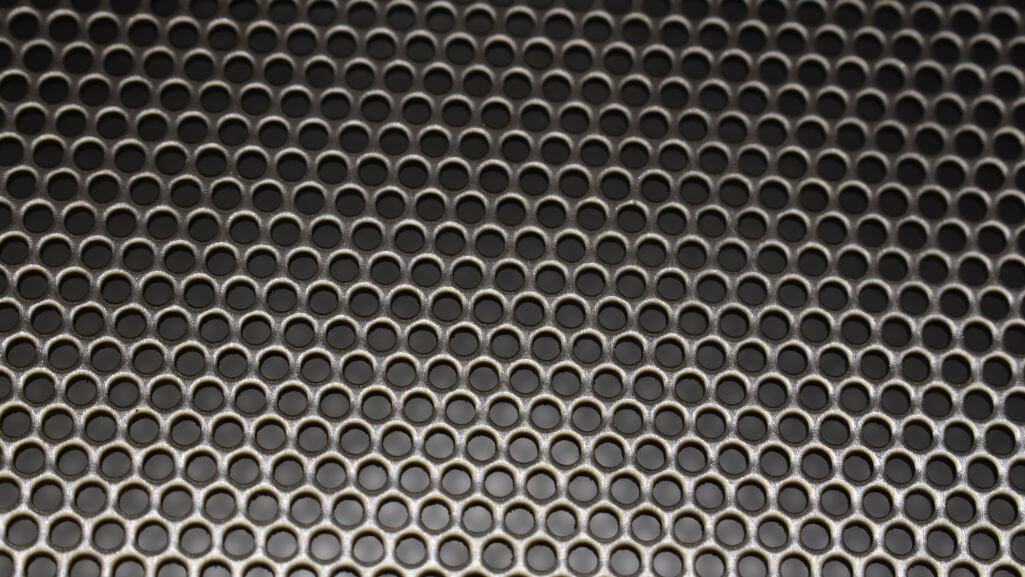
Punched from a solid sheet of stainless steel rather than woven from wire, perforated mesh is far more resistant to damage and holds its aperture size accurately over time. However, it comes in a more limited range of sizes and has a lower open area, so throughput is generally lower than using woven mesh at an equivalent aperture.
Wedgewire mesh
A welded construction using wedge-shaped wires that create long, thin slots rather than square holes. Wedgewire mesh is much harder to block and gives very consistent throughput over time, which makes it well suited to the kind of variable, contaminated material common in reclamation. It has a lower open area than woven mesh and is more expensive to manufacture, which is usually reflected in the upfront cost.
Using the wrong mesh in your screening equipment will lead to blinded or damaged screens, reducing efficiency and needing more frequent replacement. The risk is higher with reclaimed material, where mixed and variable streams make wear far less predictable than with consistent feedstock such as powders. We provide specific recommendations for your mesh type, with guidance on the expected service life, depending on your material.
Custom screening configurations for non-standard material
Farleygreene builds custom sieving solutions for material that does not fit a standard sieving machine, combining mesh type, aperture, number of decks (the individual mesh layers stacked inside the machine), and sieve type to match the specific feedstock.
This is more likely to be needed in recyclate processing than in most other sectors, because reclaimed and recovered material varies so widely: from fine, static fractions to coarse, abrasive chips, sometimes within the same waste stream. We work from your specific material and the required output spec to design a sieving configuration for your needs. As your recycling process is refined, mesh sizes can be adjusted to reflect what is being learned about the material, rather than requiring a new machine each time the process moves on.
In this case study, our customer needed a check sieve to feed a hazardous product safely into a mixing system, first breaking down the irregular-sized lumps. Farleygreene supplied a specially designed centrifugal sifter on a bespoke support frame, with access restricted to maintenance engineers for safety. Material that could not be effectively processed on a standard machine is now effectively sorted using a custom sieving solution.
Sustainability targets for recycling operations
Recovery rate is about sustainability as well as profitability, since minimising waste streams and improving material recovery rates serve both goals. In the UK, sustainability is measured directly: for example, under the Packaging Extended Producer Responsibility scheme (pEPR), annual recycling targets for packaging materials are set for each year through to 2030, and fees are increasingly weighted toward how recyclable the material is. Whether your sustainability targets come from pEPR, from a downstream customer’s recycled content requirements, or from your own waste diversion goals, improving material recovery through effective screening can support progress towards those objectives.
Farleygreene’s own sustainability commitment runs alongside this. Every order contributes to our More Trees initiative, supporting global tree planting as part of our wider commitment to sustainable manufacturing.
Testing your recycled material before you invest in a sieve
Farleygreene offers machinery demonstrations and product trials using your own material, so you can see how a sieve performs before making a purchasing decision.
A trial lets you test a typical mixed batch of recycled material to ensure that a sieve can be configured to meet your needs, and verify the recovery rate. Adjustments can be made based on how your material behaves in practice, showing you how the right screening equipment can help recover the maximum amount of valuable material, minimise your waste streams, maximise yield and ultimately improve your resale value.
Book a trial or a machinery demonstration now by calling our team on +44 (0) 1256 474 547 to obtain real performance data for your own recycled feedstock before you commit.
About the author
Daniel Morlan is Global Sales Manager at Farleygreene, working with manufacturers across food, chemical and recycling sectors worldwide to specify sieving and screening equipment that matches the realities of their material and process. He has advised on projects ranging from nutraceutical powder handling to reclaimed material screening, and writes here on what makes recycling and reclamation a particular sieving challenge.
…………………………………………………………………………………………………………………………………………………………………………………………………………………………………………………………………..
FAQs about screening reclaimed and recycled material
1. What screening equipment suits plastic, glass, or e-waste recycling?
The right equipment depends on the material’s particle size range, abrasiveness, and moisture content as much as the material category itself. As a general starting point, grading equipment such as Multiscreen suits material needing separation into multiple size bands, while fine or static fractions benefit from ultrasonic sieving to prevent blinding. The safest way to confirm the right sieve configuration is a trial using your own material, rather than a general material-type match.
2. Does better screening help meet recycling sustainability targets?
Yes, indirectly but significantly. Sustainability targets in recycling, whether set by regulation, a downstream customer, or your own waste diversion goals, are usually measured in how much material you actually recover and reuse. Screening equipment that recovers more of your feedstock as sellable, in-spec material directly improves your position against those targets, since material lost to poor separation cannot count toward them.
3. How do I build a business case for screening equipment when working with reclaimed material?
A trial using your own material gives you real performance data on throughput, efficiency, recovery rate, and mesh wear that a supplier’s general specifications cannot provide. That data, tested against your required output specification, is usually the strongest evidence for a business case, since it demonstrates the equipment works for your specific material rather than material in general.
See our full FAQs page for more answers about the sieving process and equipment for recycling, and other sectors and materials.