


Experience and expertise in industrial sieving give you something no specification sheet can: confidence that your equipment will work with your material, in your process, under your real production conditions.
This year marks 50 years of Farleygreene. We have written about our founding story and the people behind it. This article is about something different: what five decades of solving real sieving problems across food, pharmaceutical, chemical, additive manufacturing and specialist processing industries has taught us, and what that means for every customer we work with.
My father, Alan Hare, co-founded Farleygreene in 1976 alongside Peter Davies with a conviction that manufacturers deserved better, more reliable and more bespoke sieving solutions. The founding philosophy was that the sieve must fit the material, not the other way round. I joined the company in 1993 as a fitter, working on the shop floor alongside the people building the machines, and took sole ownership in 2013. Fifty years on, that journey has only deepened my conviction that the founding principle is as true today as it was in 1976.
The company my father and Peter Davies started in a workshop in Feltham has changed beyond recognition over the years. We have moved from being a small domestic supplier to a manufacturer whose equipment operates in production facilities across Europe, the Middle East, Asia, Australasia and the Americas. The Sievmaster range has grown from a handful of machines to a comprehensive portfolio covering check sieving, grading, linear, centrifugal, ultrasonic and small batch applications. Our founding philosophy and commitment to UK manufacturing have underpinned everything we have built.
Reliable sieving performance in any application, in any industry, depends on understanding your material, your process and your production environment first, then choosing equipment that fits all three. The experience and expertise to do that well takes decades to build. Here is what it means for you.
1. Specifying the right sieving machine: confidence built on experience
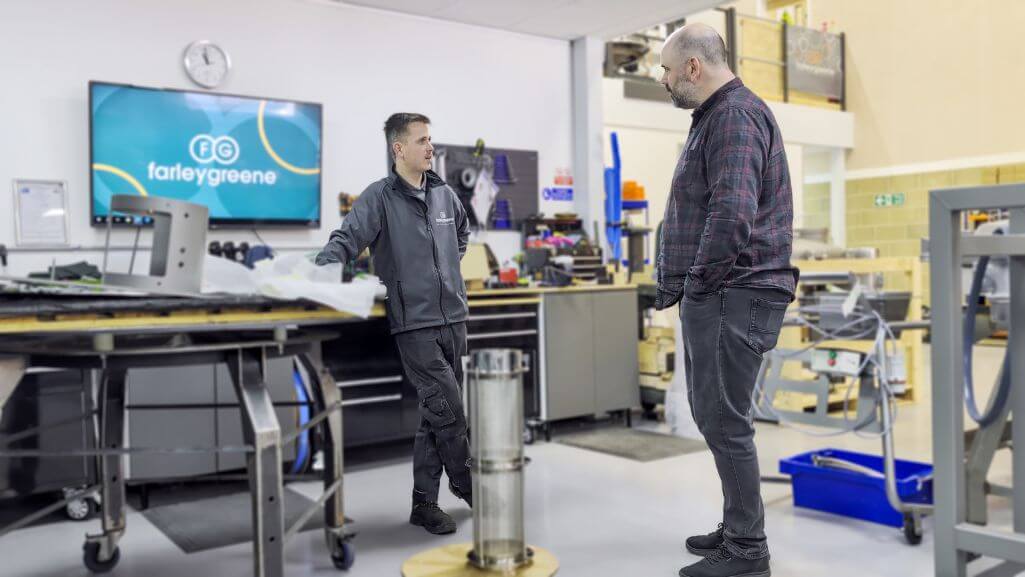
Over five decades of working across processing industries, our team has built up a depth of application knowledge that directly improves the quality of every specification we make. We have worked with thousands of different materials and different production environments, accumulating practical experience that means we know which questions to ask before recommending a sieve for your application.
Material properties that appear similar on paper can behave very differently on a mesh surface. Particle size distribution, density, moisture content, shape and flowability all affect how a product interacts with the sieve, and those interactions are specific to each application. A powder that flows freely under normal handling may compact or agglomerate once subjected to sustained vibration. A material that screens efficiently at one feed rate can blind the mesh entirely at a slightly higher rate. These are normal variables that make real-world sieving more demanding than any datasheet can capture, and recognising them early is what separates a reliable specification from one that will cause problems in production.
The practical result for you is a specification you can trust from the outset: one that accounts for how your material actually behaves, not how a similar material performed in a different process.
The value of cross-industry expertise
Farleygreene supplies sieving equipment to manufacturers across food and drink, pharmaceutical, chemical, additive manufacturing and specialist processing industries worldwide. That breadth matters because challenges that are uncommon in one sector are often well understood in another. The contamination control insight developed across decades of food manufacturing applies directly in nutraceuticals and life sciences. The separation precision required by pharmaceutical applications informs how we approach fine chemical processing. That long-term exposure to different products, environments and production challenges is what allows us to identify the risks in your application before they become problems in your production.
“The benefit of working with a team that has seen almost every sieving challenge across a range of industries is that we can tell you early, before anything is ordered or installed, where the risks are likely to be and how to address them.”
Antony Hare, Managing Director
2. Testing: see exactly how your sieve will perform before you commit
Product testing before purchase is standard practice in our industry, and our Hampshire test facility, opened in 2014, is where we translate that standard into specific, reliable answers about how your material will behave in production. What distinguishes our testing from a simple machine demonstration is the depth of application knowledge brought by our engineers. They configure the machine, mesh and settings specifically for your material and your process requirements, drawing on direct experience of how similar materials have behaved in comparable applications, to give you the most reliable possible picture of production performance.
Experience in action: two applications where testing made the difference
This level of expertise can make a significant difference to sieving efficiency. A global vanilla powder manufacturer came to us with a persistent mesh blockage problem affecting throughput. Our engineers, drawing on experience of fine powder behaviour across multiple food and nutraceutical applications, identified that integrating an ultrasonic system into the specification would resolve the flow problem. Testing confirmed it, delivering a throughput increase of up to 50 per cent.
A pharmaceutical manufacturer faced a similar situation: a competitor’s system had failed to separate fine particulate reliably from a spheroid, granular drug product without causing breakage. Trials at our facility identified the Segregator 42 linear sieve as the right solution. The gentle linear motion provided the lift needed to prevent mesh blinding without stressing the product, delivering clean separation with no dust and no damage to the finished granules. As with the vanilla powder application, the most effective solution was not the most obvious the most effective solution only became clear through methodical testing and the experience to read the results correctly.
For customers who prefer to evaluate equipment in their own production environment, we offer two-week free machine hire, giving you the opportunity to validate performance against your actual process conditions before committing to a purchase.
“When a customer watches their own material running through a machine configured specifically for their process, the benefits are clear. That confidence, built on proven performance with their actual material, means installation runs smoothly and production performance is reliable from day one.”
Daniel Morlan, Global Sales Manager
3. Mesh selection: where experience prevents costly mistakes
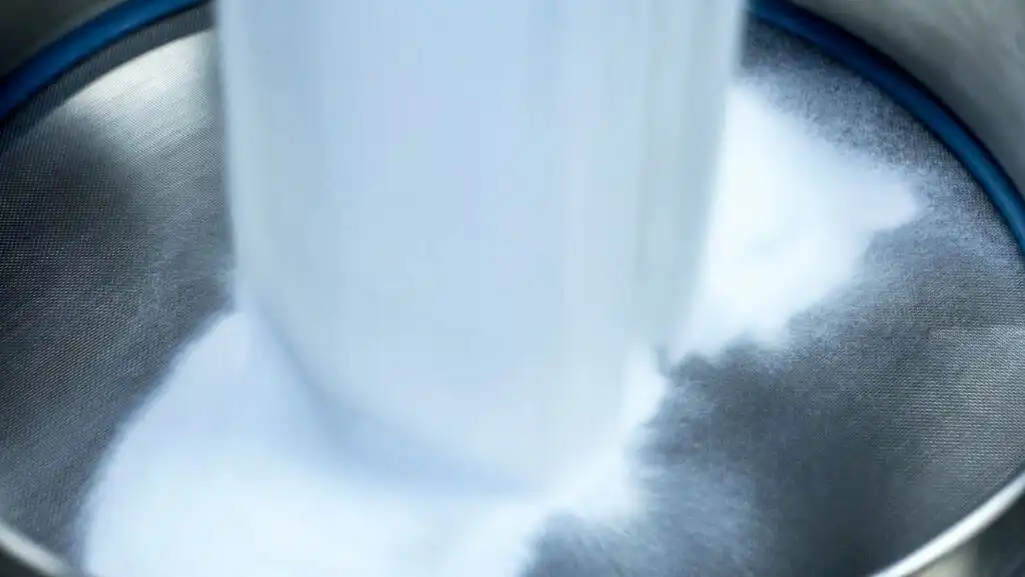
Over five decades of specification and aftersales work, mesh selection is consistently the area where we see the gap between expert guidance and uninformed choice has the greatest financial consequences. Get it right and your sieve performs reliably, cleans efficiently and runs cost-effectively for years. Get it wrong and the effects compound: reduced throughput, increased downtime, higher maintenance costs and, in regulated applications, potential compliance risk.
Aperture size, wire diameter, open area and mesh type all interact in ways that are not immediately apparent from a specification sheet. A mesh with a high open area may improve separation accuracy but reduce structural durability. Thicker wire increases strength but reduces the available screening surface. In high-throughput or abrasive applications, mesh wear is a significant operational cost, and the frequency of replacement should be understood at the specification stage rather than discovered in production.
Particle size in relation to mesh aperture is a particularly important variable. Where particles are close in size to the aperture, the risk of blinding increases significantly, and the choice of mesh type, vibration settings and cleaning approach all need to reflect that. These are judgements that come from direct experience of how materials behave across many different applications.
Woven wire mesh is the most widely used option and offers excellent flexibility across aperture sizes, but it requires careful handling and regular inspection. For applications where blinding is a persistent problem, wedge wire configurations offer much greater resistance to blockage and more consistent long-term throughput. For fine or electrostatic powders where conventional vibration is not sufficient, our team has the expertise to specify ultrasonic deblinding systems, based on direct application experience across food, pharmaceutical and specialist processing industries.
4. Compliance and hygiene: deep knowledge of regulated industries
When Farleygreene was founded in 1976, industrial sieving equipment was specified primarily on mechanical performance. Over the following decades, the compliance and hygiene context has changed fundamentally, and our understanding of what regulated industries require has evolved with it at every stage.
The introduction of Hazard Analysis and Critical Control Points (HACCP) requirements, first established in UK law in 1995 and made fully mandatory for all food businesses in 2006, fundamentally changed how sieving equipment for food applications needs to be designed. Cleanability became a primary specification criterion, not a secondary one, driving crevice-free internal geometries, polished weld finishes, stainless steel contact parts and access designs that allow inspection and cleaning to be carried out reliably and repeatedly. Equipment that could not demonstrate cleanability to HACCP audit standards became commercially unacceptable in food manufacturing, regardless of its mechanical performance. We were already supplying the food industry when those requirements came in, and we redesigned to meet them in real time, not by reading about them afterwards.
The growth of pharmaceutical and nutraceutical manufacturing created a separate and distinct set of demands: far tighter separation tolerances, stricter contamination control and equipment designs that support validated cleaning procedures under Good Manufacturing Practice (GMP). Over the years, our Sievmaster Segregator and Sievemaster Slimline ranges have been refined to meet these demands directly, with design features and material specifications developed in response to real requirements from pharmaceutical and nutraceutical customers.
The shift toward finer powders across nutraceuticals, specialty chemicals and metal powders for additive manufacturing drove the development of our ultrasonic sieving systems, which allow materials that would blind a conventional mesh to be processed consistently and reliably. And the integration of sieving equipment into automated production lines has changed what a sieve means in many modern facilities: it is no longer a standalone unit but a component within a wider process, and its design, certification and documentation requirements reflect that.
Ongoing product innovation continues to be driven by direct customer feedback. The redesign of our Sievmaster Rota range to incorporate a cantilever drive shaft is a recent example: the change gave operators unobstructed access to internal components for cleaning and inspection, addressing a practical hygiene challenge that customers had raised with us directly. That cycle of customer feedback and product development is how expertise accumulates over decades.
Having lived through and responded to each of these changes as they occurred, rather than simply inheriting the standards they created, is what gives our regulated-industry expertise its depth. We know what auditors look for because we have been supporting customers through audits across these industries for a long time.
The certifications and standards you can rely on
All Farleygreene machines conform to FDA, EC 1935/2004 and ANIA regulations and are supplied with CE and UKCA marking and noise level certifications as standard. ATEX certification is available where required for applications in potentially explosive atmospheres. Our ISO 9001 quality management system underpins consistent manufacturing standards across the range, and full certification documentation is provided with every machine to support your audit procedures, installation qualifications and ongoing compliance requirements.
In regulated industries, equipment that cannot be cleaned and inspected reliably, or that cannot produce the necessary certification records, is not fit for purpose regardless of its mechanical performance. Compliance capability must be built into the specification from the start, and that requires a supplier with the industry knowledge to understand what your specific regulatory environment demands.
“The compliance landscape has changed more in the past two decades than in the previous three. Customers in regulated industries need confidence that the machine works, that it can be cleaned, and that it can be certified and audited. Our experience across those industries over five decades is what allows us to give them that confidence.”
Antony Hare, Managing Director
5. Long-term support: reliability that comes from knowing your equipment
Industrial sieving machines are expected to operate reliably for years in demanding production environments. Long-term reliability depends on the quality of the machine itself, and the depth of support available from a manufacturer. Farleygreene has designed and built their own equipment for over half a century, so can provide a fundamentally different quality of service to that offered by a distributor or service agent.
Every Farleygreene machine is designed and manufactured at our Hampshire factory by our own team. That means the full weight of engineering expertise behind your machine stays in one place, and the knowledge of how it was built is available to you for the entire operational life of the equipment. Every component is specified, every tolerance is set and every machine is assembled with direct knowledge of how it will perform in your production environment.
That same knowledge does not stop at the factory door. When you need support, our aftersales team draws on direct understanding of how your machine was built and how it behaves in service. That is what allows us to resolve issues quickly, reduce production disruption and give you confidence in the support you receive throughout the operational life of your equipment: something that simply cannot be replicated by someone working from documentation.
Our team regularly supports customers with issues that initially appear machine-related but turn out to be maintenance or configuration factors that are easy to overlook in day-to-day production. Something as straightforward as an incorrectly seated gasket can affect both hygiene performance and separation consistency by creating an uneven seal. Catching and resolving those issues quickly requires direct knowledge of the equipment, made possible by our manufacturing expertise.
What aftersales support covers in practice
Our aftersales team provides mesh replacement guidance, spare parts availability, preventative maintenance support and technical advice for configuration questions throughout the operational life of your equipment. As your production demands change over time, we support process optimisation to ensure your sieving equipment continues to deliver the performance and compliance standard your process requires. The founding principle remains the most reliable guide: the sieve has to fit the material and the process. That applies just as much five or ten years after installation as it does on the day of specification.
“Every machine that leaves this factory carries the full knowledge of how it was designed and built. When a customer contacts us years later with a question about their equipment, that knowledge is still here. We can look at exactly how their machine was made, understand how it should be performing and give advice that is specific to their equipment and their application.”
Luke Wilcox, Manufacturing Operations Manager
Experience and expertise you can trust
Fifty years is a significant milestone. For every customer who works with us, it represents something practical: the accumulated knowledge that comes from designing, building, testing and supporting industrial sieving equipment across a wide variety of industries, materials and production environments.
The principle my father and Peter Davies founded this company on in 1976 remains the most reliable guide we have: that the sieve has to fit the material, not the other way round. That means understanding the application properly before recommending equipment; testing with the real material before committing to a specification; and supporting the equipment throughout its operational life with the knowledge of people who built it. After fifty years, that is still what we are here to do.
Farleygreene is also a proud participant in the More Trees initiative, reflecting a commitment to responsible manufacturing that extends beyond the factory floor.
Put our experience and expertise to work for you
Farleygreene’s technical team can test your material, review your process requirements and help you identify the most suitable sieving solution with confidence. Book a machinery demonstration or contact us to discuss your application.
Written by Antony Hare, Managing Director
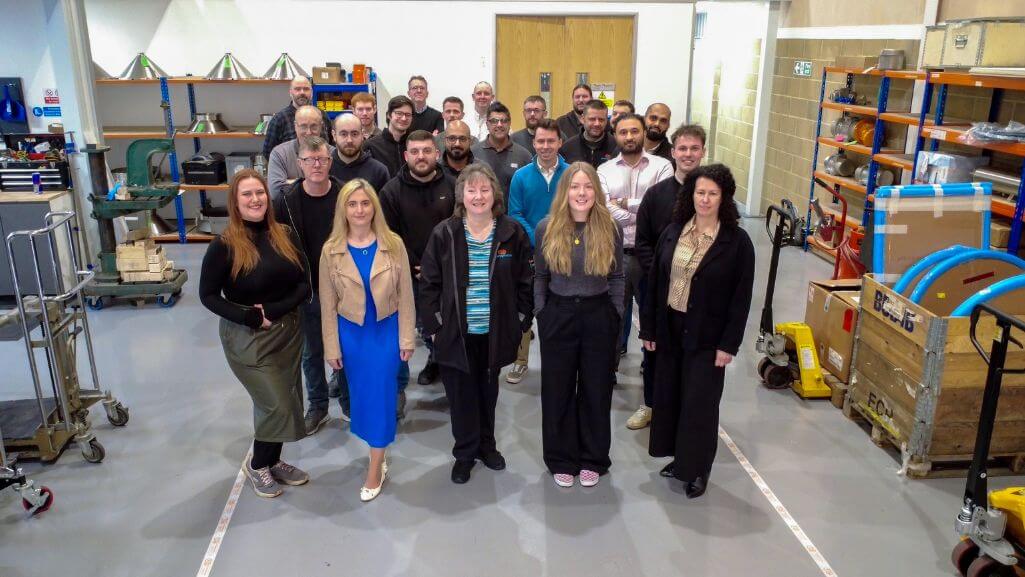
Antony Hare joined Farleygreene in 1993 as a fitter and took sole ownership in 2013, following in the footsteps of his father, co-founder Alan Hare. He leads a team of over 26 people from the company’s Hampshire factory, bringing more than three decades of hands-on operational experience to the role. Read Antony’s full profile or visit the 50th anniversary article for the full story of Farleygreene’s history.
…………………………………………………………………………………………………………………………………………………………………………………………………………………………………………………………………..
FAQs
1. What is the difference between check screening and grading in industrial sieving?
Check screening and grading are distinct sieving operations with different purposes. Check screening, sometimes called police sieving, uses a single mesh aperture to remove oversize particles, foreign bodies or agglomerates from a product stream. Its primary purpose is quality assurance and contamination control: ensuring nothing passes through that should not. Grading separates a material into two or more distinct particle size bands, typically using multiple mesh decks with decreasing aperture sizes. Its purpose is particle size classification, producing fractions that meet specific size requirements for downstream processing or finished product specifications. In practice, check screening is the more common application across food, pharmaceutical and chemical processing, while grading is used where precise size distribution control is a process requirement.
2. What is the most important factor in industrial sieving performance?
The most important factor in industrial sieving performance is understanding how your specific material behaves under real processing conditions. Particle size distribution, density, moisture content, shape and flowability all affect how reliably product passes through the mesh, and these properties interact with mesh specification, feed rate and vibration settings in ways that are specific to each application. No single variable determines performance in isolation, which is why live product testing with the actual material is consistently the most reliable way to ensure a sieve will perform as expected once it is installed in production.
3. Why does mesh selection matter so much when specifying a sieve?
Mesh selection directly affects separation accuracy, throughput, cleaning frequency and long-term running cost. Aperture size determines which particle sizes pass through, but wire diameter, open area and mesh type all influence how efficiently and reliably that separation happens in practice. In high-throughput or abrasive applications, mesh wear is a significant cost variable that should be factored into total cost of ownership at the specification stage. Getting mesh selection right from the outset, based on direct knowledge of how different mesh types perform with different materials, protects you from avoidable production problems and unnecessary cost later.
4. When should I consider an ultrasonic sieving system?
Ultrasonic sieving is most useful where fine or difficult powders are causing persistent mesh blinding, inconsistent throughput or poor separation efficiency under conventional vibration alone. Ultrasonic systems apply high-frequency vibration directly to the mesh, keeping apertures clear and supporting more consistent product flow. They are particularly effective for fine powders below 100 microns, electrostatic or hygroscopic materials that tend to cling to the mesh, and applications where downtime for manual mesh clearing is not acceptable. Live testing with your actual material is the most reliable way to determine whether ultrasonic enhancement will deliver a meaningful improvement for your specific application.
5. What compliance certifications should I expect from industrial sieving equipment?
Industrial sieving equipment for regulated applications should conform to the standards relevant to your industry and geography. All Farleygreene machines conform to FDA, EC 1935/2004 and ANIA regulations and are supplied with CE and UKCA marking and noise level certifications as standard. ATEX certification is available where required for applications in potentially explosive atmospheres. ISO 9001 certification demonstrates consistent quality management across the manufacturing process. Full certification documentation is provided with every machine to support your audit procedures, installation qualifications and ongoing compliance requirements.
6. Why is live product testing recommended before purchasing industrial sieving equipment?
Live product testing is recommended because material behaviour under real processing conditions is difficult to predict from specification data alone. Testing with the actual material reveals flow characteristics, mesh interaction and throughput limitations before equipment is installed, and allows machine settings and mesh specification to be optimised for your specific process. The result is equipment that performs reliably from installation. Farleygreene offers in-house testing at its Hampshire facility and two-week free machine hire for customers who prefer to validate performance in their own production environment.
7. How does long-term aftersales support affect sieving reliability?
Long-term sieving reliability depends on consistent maintenance and informed support as much as machine quality. Mesh wear, gasket condition, vibration settings and cleaning practices all affect performance over time, and issues in these areas can reduce throughput, compromise separation accuracy or create hygiene risks. Choosing a manufacturer who designs and builds their own equipment means the support available to you is based on direct knowledge of how the machine was built and how it performs in service. That depth of knowledge shortens resolution times and gives you greater confidence in the support you receive throughout the operational life of your equipment.
8. What industries does Farleygreene supply industrial sieving equipment to?
Farleygreene supplies industrial sieving equipment to manufacturers across the food and drink, pharmaceutical, chemical and additive manufacturing sectors, as well as life sciences, nutraceuticals, advanced manufacturing, renewable energy and specialist industrial processing. Over five decades of cross-industry experience has given the Farleygreene team a broad understanding of where sieving performance issues are most likely to occur and how to address them before they affect production.